
Chinese Honey Locust Rice
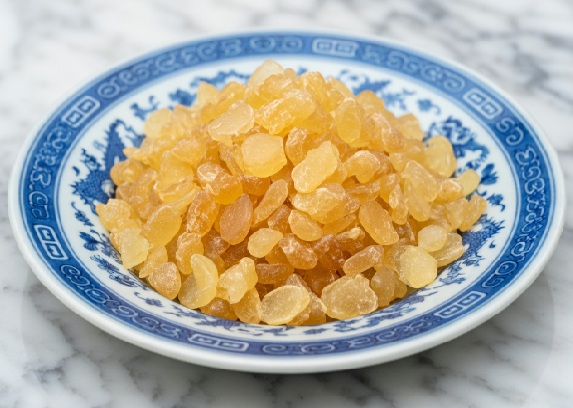
Chinese Honey Locust Rice (Zao Jiao Mi): A Transformative, Slightly Warm Ingredient for Phlegm, Digestion, and Traditional Applications
Introduction
Chinese honey locust rice has been used in Traditional Chinese Medicine (TCM) as a strong, transforming substance known for its ability to break up accumulations and clear blockages. Derived from the honey locust tree, it is valued more for its functional properties than for everyday nourishment, and is used carefully in specific therapeutic preparations.
What Is Chinese Honey Locust Rice?
Chinese honey locust rice (Zao Jiao Mi / 皂角米) refers to the processed seeds or inner material of the honey locust pod. Despite the name “rice,” it is not a grain but a plant-derived substance that expands when soaked. In TCM, it is traditionally used in small amounts for its strong dispersing and cleansing properties.
Health Benefits of Chinese Honey Locust Rice
Transforms Phlegm and Clears Congestion
Chinese honey locust rice is traditionally used to help break up stubborn phlegm and clear accumulations in the lungs and chest.
Supports Respiratory Function
It is sometimes used in specific preparations to help open the airways and support easier breathing when phlegm is present.
Promotes Digestive Movement
Its dispersing nature may help move stagnation in the digestive system and reduce feelings of fullness or blockage.
Clears Dampness and Accumulations
In TCM, it is valued for helping to clear dampness and dissolve masses or buildup within the body.
Supports Detoxifying Processes
Chinese honey locust rice is traditionally associated with cleansing properties, helping the body eliminate unwanted accumulations.
How to Use Chinese Honey Locust Rice
Soaked and Expanded Preparation
Soak a very small amount in water until it expands. It is typically used in minimal quantities due to its strong nature.
Herbal Decoctions
Often added in tiny amounts to herbal formulas designed to transform phlegm or clear blockages. It is rarely used alone.
Specialized Medicinal Soups
In some traditional practices, it may be included in therapeutic soups under guidance, combined with balancing herbs to moderate its intensity.
Powdered Form
Sometimes ground into powder and used in very controlled amounts in traditional formulations.
External or Traditional Applications
In some cases, it has been used externally or in non-food preparations due to its strong properties.
Traditional Food Therapy Applications
Chinese honey locust rice is not commonly used in everyday soups like nourishing herbs. Instead, it appears in specialized TCM formulas aimed at resolving phlegm, clearing stagnation, or addressing specific imbalances.
Where to Buy Chinese Honey Locust Rice
You can find Chinese honey locust rice at:
- Traditional Chinese medicine shops
- Specialized herbal stores
- Online TCM suppliers
Look for:
- Clean, dry pieces or seeds
- Light yellow to amber color when soaked
- No strong or unpleasant odor
- Proper packaging and labeling
Are There Any Side Effects?
Chinese honey locust rice is potent and should be used with caution. Excessive or improper use may irritate the throat or digestive system. It is not recommended for regular dietary use and should ideally be used under guidance.
Conclusion
Chinese honey locust rice is a powerful, specialized ingredient in TCM, valued for its ability to transform phlegm and clear internal blockages rather than for general nourishment.
FAQs
Is Chinese Honey Locust Rice toxic?
It is not considered toxic when properly prepared and used in very small, appropriate amounts, but it is strong and not for casual use.
Can Chinese Honey Locust Rice be used regularly?
No, it is typically used only when needed for specific conditions, not as a daily food ingredient.
Is Chinese Honey Locust Rice warming or cooling?
It is generally considered slightly warm and strongly dispersing in nature.