
Poria, Lily Bulb & Rose Harmony Tea
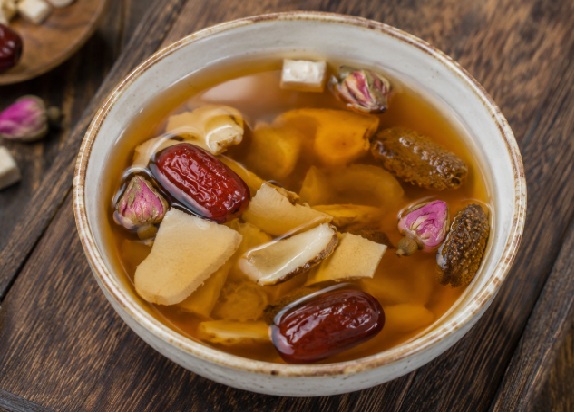
Poria, Lily Bulb & Rose Harmony Tea (Serves 2–3)
Ingredients (Serves 2–3)
- 10g Poria Cocos (Fu Ling)
- 10g Dried Lily Bulbs (Bai He)
- 6–8 Dried Rose Buds
- 1 tablespoon Dried Mulberries
- 3–4 Red Dates (Jujube), pitted
- 800–1000 ml water
- Optional: Rock sugar or honey (to taste)
Instructions
1. Prep the Ingredients
- Rinse Fu Ling, lily bulbs, mulberries, and red dates under cool water.
- Lightly tear or slice the red dates to release more flavor.
2. Simmer the Base
- Add Fu Ling, lily bulbs, mulberries, and red dates into a pot with water.
- Bring to a gentle boil, then reduce heat and simmer for 20–25 minutes.
3. Add the Rose
- Turn off heat and add the rose buds.
- Cover and steep for 5–8 minutes to preserve the delicate floral aroma.
4. Sweeten & Serve
- Add rock sugar or honey if desired.
- Strain into cups and serve warm.
Tips
- For a stronger herbal effect, simmer up to 30 minutes
- For a lighter tea, reduce simmer time to 15 minutes
- Can be enjoyed warm or chilled as a refreshing herbal drink
Effects/Benefits
Poria (Fu Ling): Improves sleep quality, reduces anxiety, and balances fluids by suppressing inflammatory cytokines like TNF-α (Frontiers in Nutrition, 2026).
Lily Bulb (Bai He): Soothes dry coughs by hydrating respiratory tissues and uses natural alkaloids to reduce mental restlessness (Journal of Ethnopharmacology, 2025).
Rose Buds (Mei Gui Hua): Delivers rich flavonoids that combat cellular aging, ease abdominal tightness, and provide an organic stress-relieving effect (Molecules, 2025).
Mulberries (Sang Shen): Uses dense anthocyanins to protect blood vessels while specialized compounds slow down carbohydrate digestion to regulate blood sugar (Phytotherapy Research, 2025).
Red Dates (Hong Zao): Boosts cellular energy metabolism to fight physical fatigue and provides soluble fibers that actively protect the stomach lining (Journal of Agricultural and Food Chemistry).
Disclaimer
The information provided on this website is for educational and informational purposes only and is not intended as medical advice. Traditional Chinese Medicine (TCM) food therapy is a complementary approach and should not replace professional medical diagnosis, treatment, or advice.
Always consult a qualified healthcare provider before making changes to your diet, especially if you are pregnant, nursing, taking medications, or have a medical condition. Individual responses to herbs and foods may vary.