
Mulberry & Goji Berry Tea Recipe for Digestion & Balance
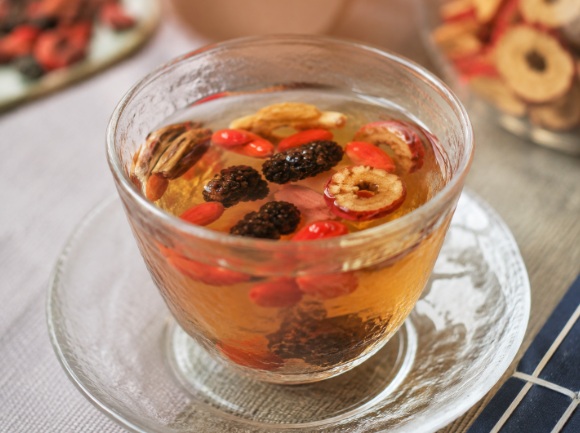
Mulberry & Goji Berry Tea Recipe for Digestion & Balance (Serves 3–4)
Ingredients
- 1 tablespoon dried mulberries (Sang Shen)
- 1 tablespoon goji berries (Gou Qi Zi)
- 1 tablespoon dried hawthorn berries (Shan Zha), sliced
- 1–2 small pieces aged tangerine peel (Chen Pi)
- 4 cups water
- Optional: rock sugar or honey, to taste
Instructions
1. Rinse the Herbs
Lightly rinse the mulberries, goji berries, hawthorn, and aged tangerine peel under cool water to remove any dust.
2. Soak (Optional but Recommended)
Place all ingredients into a pot and soak in the 4 cups of water for 10–15 minutes. This helps release the herbal properties more gently.
3. Simmer the Tea
Bring the pot to a gentle boil over medium heat, then reduce to low and simmer for 20–25 minutes.
4. Sweeten (Optional)
Add rock sugar during the last 5 minutes of cooking, or stir in honey after the tea has slightly cooled.
5. Strain & Serve
Strain into cups and serve warm. This tea can also be enjoyed chilled.
Effects/Benefits
Dried Mulberries (Sang Shen): Rich in active alkaloids like deoxynojirimycin, mulberries function as a metabolic tonic that exhibits anti-diabetic, lipid-lowering, anti-inflammatory, and hepatoprotective properties (Tricase, Cavalluzzi, Catalano, De Bellis, De Palma, Basile, Sinicropi, & Lentini, 2025).
Goji Berries (Gou Qi Zi): Packed with unique functional polysaccharides and carotenoids, goji berries enhance immune system function, provide neuroprotection, and offer potent cellular antioxidant defense (Vidović, Milinčić, Marčetić, Djuriš, Ilić, Kostić, & Pešić, 2022).
Dried Hawthorn Berries (Shan Zha): Traditionally used to promote digestion and relieve dyspepsia, hawthorn works as a cardioprotective and hypolipidemic agent by actively regulating blood lipid levels and mitigating atherosclerosis (Yang, Gu, Shen, Cao, Zhou, & Zhu, 2023).
Aged Tangerine Peel (Chen Pi): Highly valued for gastrointestinal modulation and respiratory health, aged peel contains concentrated bioactive flavonoids that yield anti-inflammatory, antioxidant, and gut-regulatory benefits (Shi, Guo, Xiao, Sarengaowa, Xiao, & Feng, 2024).