
Easy Longan Red Date Ginger Tea Recipe
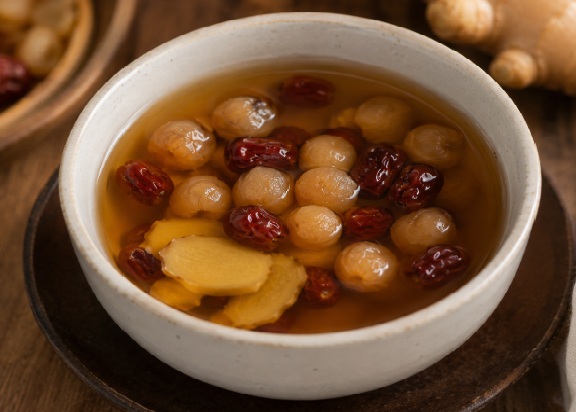
Easy Longan Red Date Ginger Tea Recipe (2–3 servings)
Prep & Cook Time
Prep: 5 minutes
Cook: 20–25 minutes
Ingredients
- 20 g dried longan (about 1/2 cup)
- 8–10 dried red dates (jujubes), lightly crushed
- 3–4 cups water (750–1000 ml)
- 1–2 slices fresh ginger (optional but recommended)
- Rock sugar to taste (about 10–20 g, optional)
Instructions
1. Rinse Ingredients
Quickly rinse the dried longan and red dates under cold water to remove any dust.
2. Prepare Red Dates
Lightly crush or slice the red dates to help release their flavor.
3. Boil the Tea
- Add longan, red dates, ginger (if using), and water into a small pot.
- Bring to a boil over medium-high heat.
4. Simmer
Once boiling, reduce to low heat and simmer for 20–25 minutes.
5. Sweeten
Add rock sugar to taste and stir until dissolved.
6. Serve
Pour into cups and enjoy warm. You can also eat the softened longan and red dates.
Tips
- For a richer, more nourishing version, simmer longer (up to 40 minutes).
- Add a small handful of goji berries in the last 5 minutes for extra flavor.
- This tea is especially comforting in cooler weather or when you want something gently sweet and warming.
Effects/Benefits
Dried Longan (Long Yan Rou): Traditionally used to nourish blood, calm the mind, and support sleep, with studies suggesting antioxidant and neuroprotective effects (Chen et al., 2014; Chinese Pharmacopoeia).
Red Dates (Jujube / Hong Zao): Known to tonify qi, support digestion, and improve sleep, and shown to have antioxidant and immune-modulating properties (Gao et al., 2013; NIH).
Fresh Ginger (Sheng Jiang): Helps warm the body, aid digestion, and reduce nausea, with strong anti-inflammatory and digestive benefits supported by clinical research (Mao et al., 2019; NCCIH).
Rock Sugar: Provides quick energy and soothes the throat, commonly used in traditional preparations to harmonize herbal formulas (Traditional Chinese Medicine dietary therapy texts).
Disclaimer
The information provided on this website is for educational and informational purposes only and is not intended as medical advice. Traditional Chinese Medicine (TCM) food therapy is a complementary approach and should not replace professional medical diagnosis, treatment, or advice.
Always consult a qualified healthcare provider before making changes to your diet, especially if you are pregnant, nursing, taking medications, or have a medical condition. Individual responses to herbs and foods may vary.