
Osmanthus & Fermented Rice Dessert Soup with Mini Tang Yuan Recipe
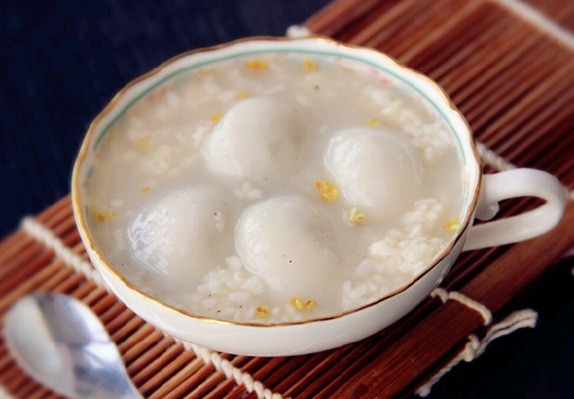
Osmanthus & Fermented Rice Dessert Soup with Mini Tang Yuan Recipe (Serves 3–4)
Ingredients
- 3 cups water
- 1 cup fermented glutinous rice (jiu niang / 酒酿)
- 1–1½ cups mini unstuffed glutinous rice balls (tang yuan / 小汤圆)
- 1–2 tbsp dried osmanthus flowers (桂花)
2–3 tbsp rock sugar (adjust to taste) - 1–2 tbsp goji berries (枸杞)
- 1–2 slices fresh ginger (optional, for warmth and balance)
Instructions
1. Prepare the base
In a pot, bring 3 cups of water to a gentle boil.
2. Cook the tang yuan
Add the mini glutinous rice balls and cook until they float (about 2–3 minutes if fresh, slightly longer if frozen).
3. Add fermented rice
Lower the heat and stir in the fermented glutinous rice. Let it simmer gently for 2–3 minutes (do not boil vigorously to preserve its delicate flavor).
4. Sweeten the soup
Add rock sugar and stir until fully dissolved.
5. Infuse aromatics
Add dried osmanthus flowers and goji berries. Simmer for another 1–2 minutes to release their fragrance.
6. Finish and serve
Remove ginger slices if used. Ladle into bowls and serve warm.
Notes & Tips
- Keep the heat gentle after adding the fermented rice to maintain its natural sweetness and aroma.
- You can adjust sweetness depending on your preference or the natural sweetness of your fermented rice.
- This dessert is best enjoyed warm but can also be lightly chilled for a refreshing version.
Effects/Benefits
Fermented glutinous rice (酒酿) – Supports digestion and gut health due to natural probiotics formed during fermentation (Zhang et al., Journal of Ethnic Foods, 2015).
Glutinous rice balls (汤圆) – Provide quick energy and are gentle on the stomach, commonly used in TCM to support spleen function (Chen, Chinese Nutrition Therapy, 2009).
Dried osmanthus flowers (桂花) – Traditionally used to aid digestion, reduce phlegm, and freshen breath (Chinese Pharmacopoeia, 2020).
Goji berries (枸杞) – Rich in antioxidants; support eye health and immune function (Amagase & Farnsworth, Journal of Alternative and Complementary Medicine, 2011).
Rock sugar – Provides mild sweetness and is considered less irritating to the throat than refined sugar in TCM (Bensky et al., Chinese Herbal Medicine, 2004).
Ginger – Helps warm the body, improve circulation, and relieve nausea (Lete & Allué, Critical Reviews in Food Science and Nutrition, 2016).
Disclaimer
The information provided on this website is for educational and informational purposes only and is not intended as medical advice. Traditional Chinese Medicine (TCM) food therapy is a complementary approach and should not replace professional medical diagnosis, treatment, or advice.
Always consult a qualified healthcare provider before making changes to your diet, especially if you are pregnant, nursing, taking medications, or have a medical condition. Individual responses to herbs and foods may vary.