
Black Rice
Black Rice: A Nutritious Grain for Blood Health, Digestion, and Antioxidant Support
Introduction
Black rice, also known as forbidden rice or Hei Mi (黑米) in Traditional Chinese Medicine (TCM), is a highly nutritious whole grain prized for its rich color, natural antioxidants, and health-promoting properties. In TCM, it is valued for supporting blood health, tonifying the Kidneys and Spleen, and aiding digestion. With its slightly sweet taste and nourishing quality, black rice is commonly used in soups, congees, and teas for both daily wellness and restorative purposes.
What Is Black Rice?
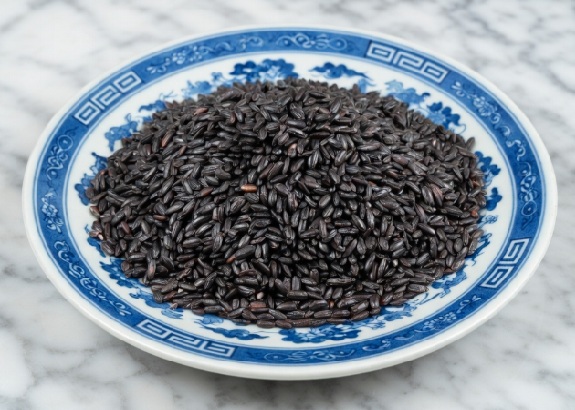
Black rice is a whole-grain rice with a deep purple-black hue due to its high anthocyanin content, a potent antioxidant. In TCM, it is considered sweet and neutral in nature and is said to enter the Liver, Kidney, and Spleen meridians. It is especially recognized for strengthening the blood, supporting the digestive system, and protecting the body from oxidative stress.
Health Benefits of Black Rice
Supports Blood Health
Rich in iron and anthocyanins, black rice helps nourish and invigorate the blood, making it beneficial for those with anemia or fatigue.
Promotes Digestive Comfort
High in fiber, it supports healthy digestion, regulates bowel movements, and prevents constipation.
Provides Antioxidant Protection
The dark pigment contains anthocyanins, which help reduce oxidative stress and protect cells from free radical damage.
Supports Heart Health
May help maintain healthy cholesterol and improve cardiovascular function due to its antioxidant and anti-inflammatory compounds.
Nourishes the Kidneys and Liver
In TCM, black rice is considered tonifying for the Kidney and Liver, helping support energy, vitality, and overall resilience.
How to Use Black Rice
In Congee or Soups
Cook 50–100 grams with water or broth for a nourishing breakfast or restorative meal. Often combined with red dates, goji berries, or lotus seeds for added blood and energy support.
As a Steamed Grain or Side Dish
Rinse thoroughly and cook like regular rice for a nutritious base to meals. Can be mixed with white or brown rice for texture and flavor balance.
In Teas or Herbal Infusions
Roasted black rice can be steeped in hot water to make a light, earthy tea that supports digestion and gently tonifies blood.
In Porridges or Desserts
Cooked with water, coconut milk, or almond milk for a sweet, nourishing porridge. Often paired with dried fruits or nuts for extra nutrition.
Where to Buy Black Rice
You can find black rice at Asian grocery stores or TCM markets, organic or health-focused supermarkets, and online retailers like Amazon, iHerb, or specialty grain suppliers. Look for whole, unpolished grains with a deep black-purple hue and organic or pesticide-free options for maximum nutrient content.
Are There Any Side Effects?
Black rice is generally safe for daily consumption. Overeating may cause mild bloating in sensitive individuals due to its high fiber content. Those with digestive weakness should start with small portions and gradually increase intake. Pregnant individuals can consume black rice in moderation as part of a balanced diet, but any medicinal use for specific TCM conditions should be supervised by a practitioner.
Conclusion
Black rice, or Hei Mi, is a nutrient-rich grain in TCM that supports blood health, digestion, and antioxidant protection. Whether cooked in congee, soups, or teas, it provides gentle nourishment and contributes to overall vitality.
FAQs
Can I eat black rice every day?
Yes, it is safe for daily consumption in moderation and can be incorporated into meals or soups for general wellness.
Does black rice taste different from white rice?
It has a slightly sweet, nutty flavor and a chewier texture compared to white rice.
Is black rice suitable for herbal soups?
Yes, black rice pairs well with TCM herbs like goji berries, red dates, or lotus seeds for nourishing soups and congees.