
Cassia Seed & Chrysanthemum Herbal Tea Recipe
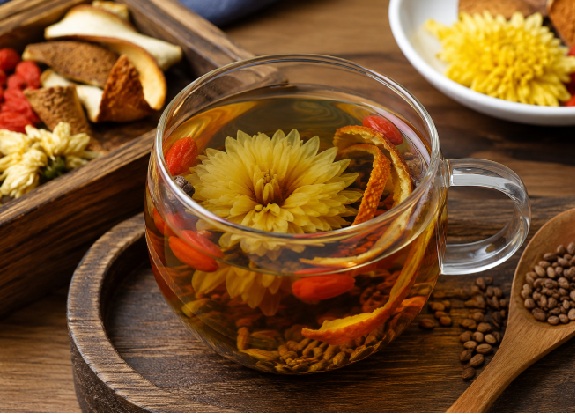
Cassia Seed & Chrysanthemum Herbal Tea Recipe (~2–3 servings)
Ingredients
- 1 tablespoon cassia seeds (Jue Ming Zi)
- 1 tablespoon dried chrysanthemum flowers
- 1 tablespoon goji berries
- 1–2 small pieces dried tangerine peel (Chen Pi)
- 3–4 cups water
- Optional: rock sugar or honey to taste
Instructions
1. Prepare the Cassia Seeds
- Lightly rinse the cassia seeds.
- (Optional but recommended) Dry-toast them in a pan over low heat for 3–5 minutes until fragrant—this enhances their aroma and effectiveness.
2. Rinse the Ingredients
Quickly rinse the chrysanthemum flowers, goji berries, and tangerine peel to remove any dust.
3. Simmer the Base
- Add cassia seeds and tangerine peel to a pot with 3–4 cups of water.
- Bring to a boil, then reduce to low heat and simmer for 15–20 minutes.
4. Add Delicate Ingredients
- Turn off the heat and add chrysanthemum flowers and goji berries.
- Cover and steep for 5–10 minutes.
5. Strain & Serve
- Strain the tea into cups.
- Add rock sugar or honey if desired.
Effects/Benefits
Cassia Seed (Jue Ming Zi): It helps lower blood lipid levels (cholesterol and triglycerides) and aids in weight management by inhibiting fat synthesis and promoting excretion (Dong et al., 2017; Yuen et al., 2021).
Dried Chrysanthemum Flowers (Ju Hua): It offers potent anti-inflammatory, antioxidant, and cytoprotective properties that help combat oxidative stress and lower systemic inflammation (Mohamad & Che Zahari, 2024; Sharma et al., 2023).
Goji Berries (Gou Qi Zi): Rich in zeaxanthin and polysaccharides, it preserves ocular health, protects against macular degeneration, and enhances immune function (Berisha et al., 2025; Zhang, 2025).
Dried Tangerine Peel (Chen Pi): It supports gastrointestinal health by relieving indigestion while simultaneously protecting against vascular inflammation and endothelial dysfunction (Wang et al., 2022; Zhang, 2026)
Disclaimer
The information provided on this website is for educational and informational purposes only and is not intended as medical advice. Traditional Chinese Medicine (TCM) food therapy is a complementary approach and should not replace professional medical diagnosis, treatment, or advice.
Always consult a qualified healthcare provider before making changes to your diet, especially if you are pregnant, nursing, taking medications, or have a medical condition. Individual responses to herbs and foods may vary.