
Moistening Jasmine & Rosebud Tea Recipe
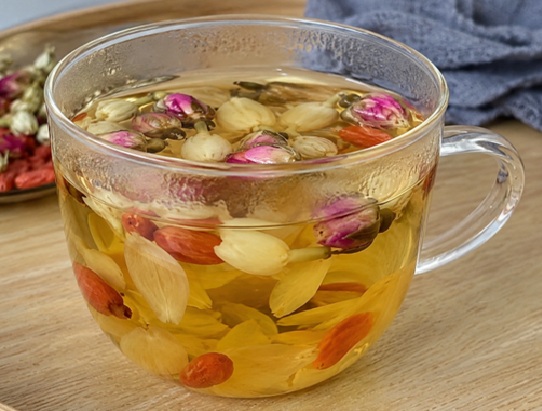
Moistening Jasmine & Rosebud Tea Recipe (2–3 servings)
Ingredients
- 1 tbsp dried Chinese rosebuds
- 1 tbsp dried jasmine flowers
- 10–15 g dried lily bulbs (百合干)
- 3–4 cups water
- 1–2 tbsp rock sugar (adjust to taste)
Instructions
1. Rinse ingredients
Gently rinse the rosebuds, jasmine flowers, and dried lily bulbs under cool water to remove dust.
2. Soak lily bulbs
Place the dried lily bulbs in warm water and soak for 15–20 minutes until softened. Drain.
3. Boil the tea
In a small pot, bring 3–4 cups of water to a boil. Add the soaked lily bulbs and simmer for 10 minutes.
4. Add flowers
Add the rosebuds and jasmine flowers. Reduce heat and simmer gently for another 5–8 minutes.
5. Sweeten
Add rock sugar and stir until fully dissolved.
6. Strain & serve
Strain into cups and serve warm. You can also chill it for a refreshing cold floral tea.
Tips
- Keep heat low after adding flowers to preserve fragrance
- Adjust steeping time for a lighter or stronger floral taste
- Can be enjoyed in the evening for a calming effect
Effects/Benefits
Dried Chinese rosebuds: Used in Traditional Chinese Medicine to regulate qi and support circulation; studies suggest rose extracts have antioxidant and mild anti-inflammatory effects (Journal of Food Science, 2011; Herbal Medicine: Biomolecular and Clinical Aspects, 2nd ed.).
Jasmine flowers: Associated with relaxation and digestive support; research shows jasmine contains compounds with antioxidant and calming (mild sedative) properties (European Journal of Applied Physiology, 2005; Journal of Agricultural and Food Chemistry, 2007).
Dried lily bulbs (百合干): Traditionally used in Traditional Chinese Medicine to nourish the lungs and calm the spirit; modern studies indicate polysaccharides in lily bulbs may support immune function and have antioxidant effects (International Journal of Biological Macromolecules, 2017).
Rock sugar: Primarily a sweetener, but in traditional use it helps soothe the throat and harmonize herbal formulas; no significant medicinal effect beyond providing carbohydrates (USDA FoodData Central).
Disclaimer
The information provided on this website is for educational and informational purposes only and is not intended as medical advice. Traditional Chinese Medicine (TCM) food therapy is a complementary approach and should not replace professional medical diagnosis, treatment, or advice.
Always consult a qualified healthcare provider before making changes to your diet, especially if you are pregnant, nursing, taking medications, or have a medical condition. Individual responses to herbs and foods may vary.