
Taro Coconut Sago Dessert Recipe
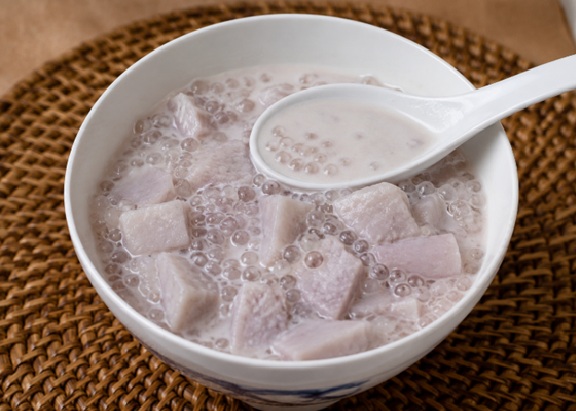
Taro Coconut Sago Dessert Recipe (3–4 servings)
Ingredients
- 300 g taro (peeled and cubed)
- ½ cup small sago pearls
- 2 cups light coconut milk
- 3–4 cups water (for cooking)
- 2–3 tbsp rock sugar (adjust to taste)
Instructions
1. Cook the sago
- Bring a pot of water to a boil.
- Add sago pearls and cook over medium heat, stirring occasionally to prevent sticking.
- When the pearls turn mostly translucent with a tiny white center, turn off heat, cover, and let sit for 10 minutes.
- Rinse under cold water and drain. Set aside.
2. Cook the taro
- In a separate pot, add taro cubes and 2–3 cups of water.
- Bring to a boil, then simmer for about 15–20 minutes until taro is soft.
- 3. Make the puree
- Remove about half of the cooked taro and mash or blend it into a smooth puree.
- Return the puree to the pot to create a creamy base while leaving some chunks for texture.
4. Add coconut milk and sugar
- Pour in the light coconut milk and add rock sugar.
- Stir gently and simmer on low heat until the sugar dissolves. Do not boil too hard to avoid curdling.
5. Combine everything
- Add the cooked sago pearls into the taro mixture.
- Stir well and simmer for another 2–3 minutes.
Serving
- Serve warm for a comforting dessert, or chill in the fridge for a refreshing version.
- The texture should be creamy with soft taro chunks and chewy sago pearls.
Effects/Benefits
Taro (芋头): Provides dietary fiber and potassium, supporting digestion and heart health (USDA FoodData Central; Journal of Food Composition and Analysis).
Sago pearls (西米): Easily digestible carbohydrates that provide quick energy and are gentle on the stomach (Food Chemistry; FAO reports on starches).
Light coconut milk: Contains medium-chain triglycerides (MCTs) that may support energy metabolism and heart health when consumed moderately (Journal of Nutrition; Harvard T.H. Chan School of Public Health).
Rock sugar (冰糖): Traditionally used in TCM to soothe the throat and reduce dryness, though nutritionally it functions as a simple sugar for quick energy (Chinese Materia Medica texts; general nutrition guidelines).
Disclaimer
The information provided on this website is for educational and informational purposes only and is not intended as medical advice. Traditional Chinese Medicine (TCM) food therapy is a complementary approach and should not replace professional medical diagnosis, treatment, or advice.
Always consult a qualified healthcare provider before making changes to your diet, especially if you are pregnant, nursing, taking medications, or have a medical condition. Individual responses to herbs and foods may vary.