
Classic Cantonese Lotus Root & Pork Soup Recipe
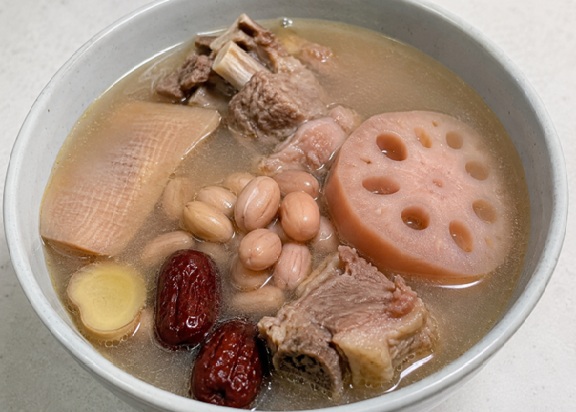
Classic Cantonese Lotus Root & Pork Soup Recipe (Serves 4–6)
Ingredients
- 500–700 g pork neck bones or spare ribs
- 1 large lotus root (about 500–600 g), peeled and cut into thick wheels
- ½ cup raw peanuts (skin-on preferred)
- 4–6 dried red dates (Hong Zao), pitted
- 1–2 dried squid or 6–8 dried scallops
- 2–3 slices fresh ginger
- 2–2.5 liters water
- Salt, to taste
Preparation
1. Soak the dried seafood
- Rinse dried squid or scallops briefly.
- Soak in warm water for 20–30 minutes until softened.
- Cut squid into pieces if using.
2. Prepare the peanuts
- Rinse and soak peanuts for 30–60 minutes (helps soften and cook evenly).
3. Prep lotus root
- Peel and slice into thick rounds (~2–3 cm).
- Rinse to remove excess starch.
4. Blanch the pork bones
- Place pork bones in a pot of cold water.
- Bring to a boil for 2–3 minutes.
- Drain and rinse thoroughly to remove impurities.
Cooking Instructions
1. Build the soup base
- In a large soup pot, add:
- Blanched pork bones
- Lotus root
- Peanuts
- Red dates
- Soaked dried seafood
- Ginger slices
2. Add water & bring to boil
- Pour in 2–2.5 liters of water.
- Bring to a rolling boil over high heat.
3. Simmer low and slow
- Reduce to low heat.
- Cover and simmer for 1.5 to 2 hours.
- Skim any foam during the first 20 minutes for a clearer broth.
4. Season and finish
- Add salt to taste near the end.
- Simmer an additional 5–10 minutes.
Effects/Benefits
Lotus Root (莲藕) – Rich in dietary fiber and vitamin C, supporting digestion, immune function, and reducing inflammation (USDA FoodData Central; Chen et al., Journal of Food Composition and Analysis, 2013)
Raw Peanuts (花生) – Contain healthy monounsaturated fats and protein that help improve heart health and lower LDL cholesterol (Harvard T.H. Chan School of Public Health; Ros, American Journal of Clinical Nutrition, 2010)
Pork Bones / Ribs (猪骨) – Provide collagen, gelatin, and minerals that support joint, skin, and bone health when slow-simmered (Oesser et al., Journal of Nutrition, 1999; USDA Nutrient Database)
Dried Red Dates (红枣 / Hong Zao) – High in antioxidants and polysaccharides that may boost immunity, improve sleep, and support blood health (Gao et al., Journal of Ethnopharmacology, 2013)
Dried Squid or Dried Scallops (干鱿鱼 / 干贝) – Excellent source of protein, zinc, and B vitamins, supporting immune function and energy metabolism (USDA FoodData Central; EFSA Nutrient Reports)
Ginger (姜) – Contains bioactive compounds like gingerol with anti-inflammatory and digestive benefits, helping reduce nausea and improve circulation (NIH; Mashhadi et al., International Journal of Preventive Medicine, 2013)
Disclaimer
The information provided on this website is for educational and informational purposes only and is not intended as medical advice. Traditional Chinese Medicine (TCM) food therapy is a complementary approach and should not replace professional medical diagnosis, treatment, or advice.
Always consult a qualified healthcare provider before making changes to your diet, especially if you are pregnant, nursing, taking medications, or have a medical condition. Individual responses to herbs and foods may vary.