
Winter Melon with Pork Bone Soup Recipe
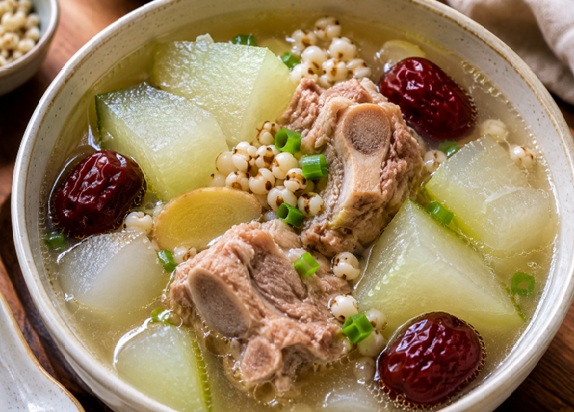
Winter Melon with Pork Bone Soup Recipe (Serves 3–4)
Ingredients
- 500–700 g pork bones (neck bones or ribs)
- 500 g winter melon (冬瓜), peeled and cut into large chunks
- ¼ cup Job’s tears (薏米 / coix seeds)
- 3–4 dried honey dates (蜜枣)
- 2–3 slices fresh ginger
- 2–2.5 liters water
- Salt, to taste
Instructions
1. Prep the Ingredients
- Rinse pork bones under cold water.
- Soak Job’s tears for 30–60 minutes (optional but helps soften them).
- Peel winter melon, remove seeds, and cut into chunks.
- Rinse dried honey dates briefly.
2. Blanch the Pork Bones
- Bring a pot of water to a boil.
- Add pork bones and blanch for 2–3 minutes to remove impurities.
- Drain and rinse thoroughly under cold water.
3. Start the Soup Base
In a clean pot, add:
- Blanched pork bones
- Job’s tears
- Honey dates
- Ginger slices
- Water (2–2.5 L)
Bring to a boil over high heat.
4. Simmer
- Once boiling, reduce heat to low.
- Cover and simmer for about 1 to 1.5 hours.
5. Add Winter Melon
- Add winter melon chunks.
- Continue simmering for another 30–40 minutes, until melon is tender and translucent.
6. Season & Serve
- Add salt to taste.
- Serve hot as a comforting soup.
Tips
- Clear broth tip: Skim off any foam during the first 15 minutes of simmering.
- Extra flavor: Add a small piece of dried tangerine peel for depth.
- Texture preference: Cook longer for softer, melt-in-your-mouth winter melon.
Effects/Benefits
Winter melon (冬瓜): Low in calories and high in water, it may help promote hydration, reduce inflammation, and support blood pressure regulation due to its potassium content (USDA; Journal of Food Composition & Analysis).
Pork bones (猪骨): Provide collagen, amino acids, and minerals like calcium and phosphorus that may support joint, skin, and bone health (Nutrients Journal; Harvard Health).
Job’s tears (薏米 / coix seeds): Traditionally used to reduce dampness; studies suggest anti-inflammatory, diuretic, and potential metabolic benefits (Journal of Ethnopharmacology; Food Chemistry).
Dried honey dates (蜜枣): Naturally sweet and rich in antioxidants, they may support immune function and provide mild energy while helping to soothe the throat (Nutrients Journal; Food Research International).
Ginger (姜): Contains gingerol compounds that may aid digestion, reduce nausea, and provide anti-inflammatory and antioxidant effects (International Journal of Preventive Medicine; NIH).
Disclaimer
The information provided on this website is for educational and informational purposes only and is not intended as medical advice. Traditional Chinese Medicine (TCM) food therapy is a complementary approach and should not replace professional medical diagnosis, treatment, or advice.
Always consult a qualified healthcare provider before making changes to your diet, especially if you are pregnant, nursing, taking medications, or have a medical condition. Individual responses to herbs and foods may vary.